
What the Shroud of Turin reveals to us about what Jesus looked like, how He was tortured, and the suffering He endured

By ANDREW HANSEN
Editor
The Shroud of Turin is a blood-stained linen cloth that carries the image of a crucified man, believed by many to be Jesus of Nazareth and thought to be the burial cloth mentioned in the Gospels. The shroud shows a faint imprint of the front and back of a naked man, with markings indicating that he was beaten, scourged, crowned with thorns, crucified, and pierced in the side by a spear.
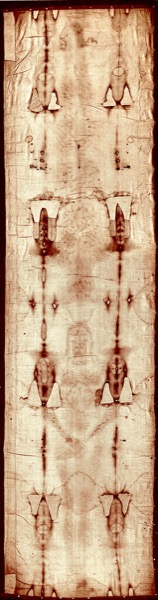
The face of Christ?
Forensic scientists and image experts have analyzed the Shroud of Turin and suggest that the man has a beard, with long hair gathered at the back, and his beard is split in the middle, possibly where blood or sweat caused the hairs to stick together. He has a narrow, oval-shaped face, a long prominent nose, and almond-shaped eyes. The man is estimated to be about 5 feet 11 inches tall, weighing around 180 pounds, and muscular. As a Jewish man from Galilee in the first century, Jesus likely had a Middle Eastern appearance, with olive or darker skin typical of the region. He would have worn simple, modest clothing of the time, such as a tunic with a belt and a mantle, made from natural fibers like wool or linen.
In 1976, scientists from the U.S. Air Force Academy examined the Shroud of Turin using new technology and discovered that the shroud contains 3-D information encoded in it. This is not present in a regular photograph, but the shroud reveals an accurate 3-D image of a human figure.
Although there are no contemporary descriptions of Jesus’ appearance, this modern analysis shows striking similarities to many traditional portraits of Jesus that date back centuries.
St. Faustina also reported visions of Jesus as the Divine Mercy, with rays of light emanating from His heart. She was instructed by Jesus to have an image painted according to her vision, with the inscription “Jesus, I trust in You.” This image bears a remarkable resemblance to other depictions of Jesus, including those derived from the Shroud of Turin.
Jesus’ scourging, crowning with thorns, carrying of his cross, and crucifixion
Scientists who have studied the Shroud of Turin have counted over 120 dumbbell-shaped scourge marks on the body. These marks cover both the front and back, including the buttocks and pelvic area. The whip used likely had leather straps with lead balls at the ends, similar to small dumbbells. The patterns of the wounds suggest that two individuals were whipping Jesus, striking his naked body with force. According to the marks on the Shroud, the scourging was quite severe.
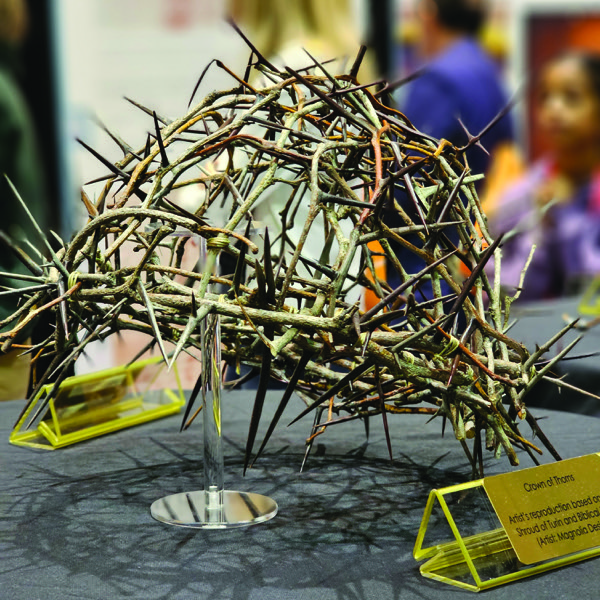
Next, we look at the crown of thorns, which the Gospels say was placed on Jesus by Roman soldiers to mock Him. Unlike the crown of thorns often depicted in artwork, which is a circle and goes around Jesus’ head, the Shroud of Turin indicates that the crown was more like a cap, covering both the sides and the top of the head. The Shroud reveals approximately 50 wounds on the head, inflicted by thorns that were several inches long — sharp enough to pierce through the scalp and possibly into the skull, causing intense pain. Jesus is the only person recorded in history to have been both crowned with thorns and crucified.
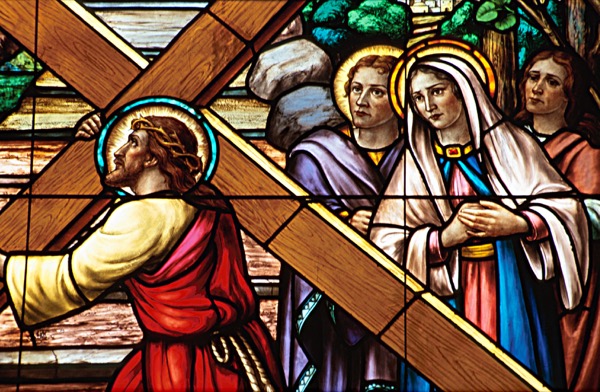
Contrary to popular depictions in art and film where Jesus carries the entire cross, the Shroud of Turin suggests that He only carried the horizontal beam, not the whole cross. This beam would have weighed over 100 pounds, which, combined with Jesus’ already weakened state from the scourging, led Him to fall three times on the way to the crucifixion site. The Gospels tell us that Simon of Cyrene was compelled to help Jesus carry this load.
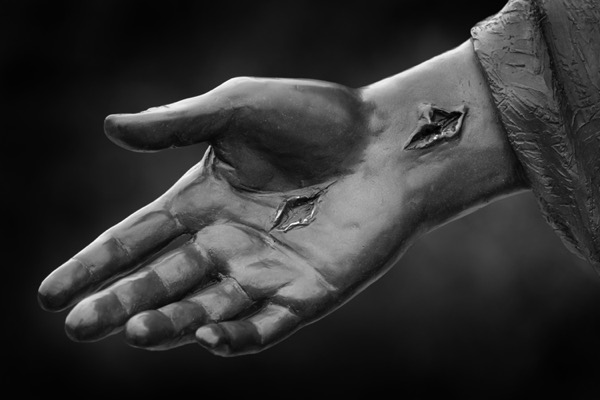
Regarding the crucifixion itself, art and movies often show Jesus being nailed through the palms of His hands. However, the soft tissue of the palms could not have supported the weight of Jesus’ body as the nails would have ripped through. Instead, the nails were likely driven into a small area at the base of the thumb, under the wrist, where they could secure the body to the cross without shattering the bones, allowing Jesus to remain on the cross.
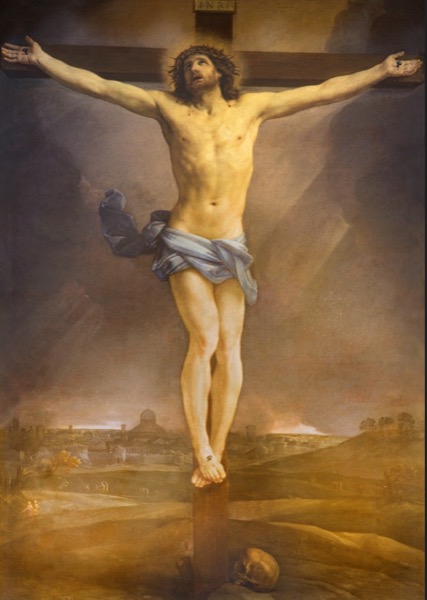
How did Jesus die? Most crucifixion victims died from asphyxiation as they were too exhausted and in too much pain to continue lifting themselves to breathe. However, the Gospels indicate that Jesus spoke right up until His death, suggesting Jesus may have died from a sudden heart-related event, such as a heart attack. The cumulative effects of the scourging, the crown of thorns, carrying the cross, and being nailed to the cross likely contributed to this rapid death. In scripture, it says Jesus’ bones were not broken to hasten death, and the Shroud confirms this as there are no broken bones in the image.
Finally, the Shroud depicts an oval-shaped wound on the right side of the body. The Gospel of John records that a Roman soldier pierced Jesus’ side after His death to ensure He was dead. Scientists analyzing the Shroud found both blood and clear fluid at the site of the wound, indicating that the blood was post-mortem — confirming that the man was already dead when the wound was inflicted.
- Information taken from the Man of the Shroud exhibit.