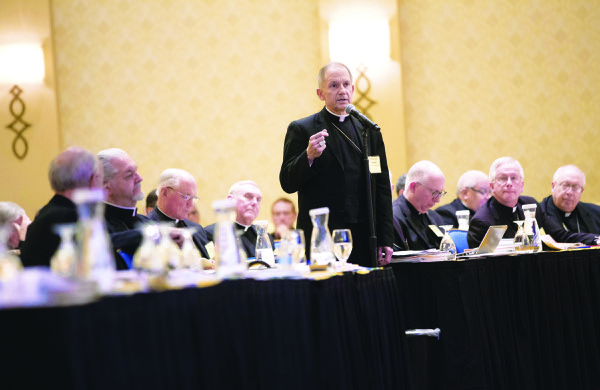
What a bishop’s life is like when he’s not praying, celebrating Mass, or working
Getting paid, laundry, grocery shopping, vacation time, cleaning vestments: What is a bishop’s life like?
You see Bishop Thomas John Paprocki at Mass, confirmations, public appearances, talks, and in our schools, but what does his life look like outside of all that? Catholic Times editor, Andrew Hansen, sat down with Bishop Paprocki.
Q. How do you get paid?
A. I get paid by direct deposit paycheck. I do get a salary, but I'm not the highest paid person. I'm not anywhere near being the highest paid person at the diocese. I make a little bit more than our priests.
I would point out what some people don't know is there's a difference between priests who take a vow of poverty and diocesan priests. Priests that belong to a religious order like the Franciscans or the Norbertines that we have in our diocese, they take a vow of poverty, which means their paycheck gets turned over to their religious community, but then the order provides for their needs. So, they provide a car, they provide food, room and board, health insurance, and things like that. Diocesan priests, on the other hand, do not take a vow of poverty, which maybe some people don't realize. However, we are expected to live simply.
As the bishop, I'm technically the CEO of the religious corporation, but I don't make the most money and actually, it is not even close. We get a salary which means that we pay taxes. For the most part, we pay for most of our personal expenses like our cars. The diocese gives some travel allowance for priests, but in my case, one of the perks I get as being bishop of the diocese — the diocese provides a car for me. The parish also normally provides room and board for priests so to that extent, we don't necessarily have to be paying for our meals, but other things like our clothing, and if I go to a sporting event, I pay for that out of my own pocket.
Q. How many hours a week do you work?
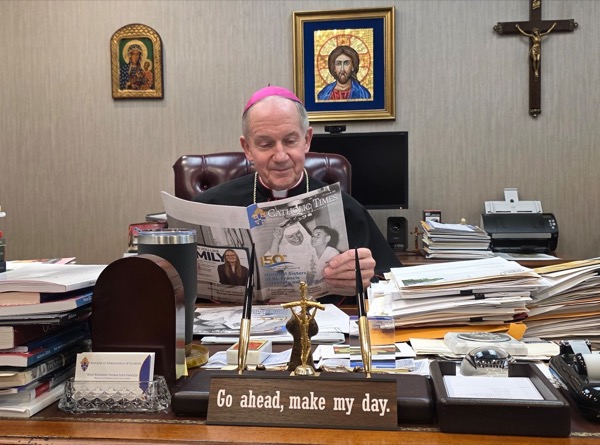
A. That's a very good question. I don't punch a clock, so I don't really know. I suppose I put in somewhere like 60 hours a week because I'm here at the pastoral center in Springfield during the week. I have meetings. I'm at my desk handling mail and email, but then in the evenings, often times, we have confirmations on Tuesdays and Saturday mornings. I'm in parishes many of the weekends or at the cathedral.
There's not a clear distinction sometimes between what's work and what's recreation. Being a priest and being a bishop is relationship with people. So, when I go to a reception, it doesn’t feel like work to be there.
Q. What time do you get up in the morning?
A. Typically my alarm goes off at 4:40 a.m. We have the practice in our diocese that at 4:40, we pray a Hail Mary for our goal of 40 seminarians in our diocese. Since I'm usually busy in in the afternoon, I set mine at 4:40 in the morning. Sometimes I hit the snooze button, though, and I go back to sleep for a little bit, but typically I'm up somewhere between 5:30 and 6.
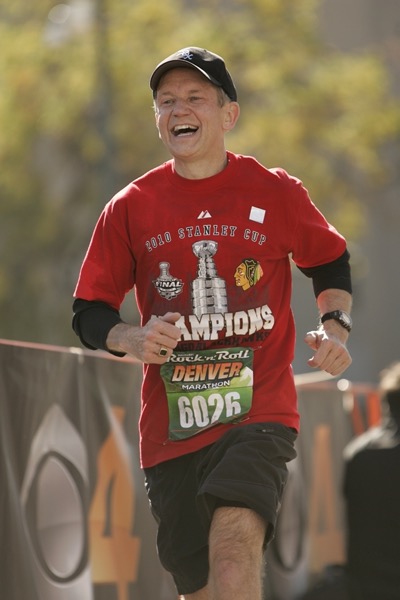
My day starts out normally with going for a run. I like to run at least a couple of miles every morning. It kind of wakes me up, gets me going. Then, I come back, and I have my prayers. I have a chapel in my residence at the cathedral rectory, so I say my Office of Readings, Morning Prayer, and if I don't have a public Mass that day, I say private a Mass in my own chapel and spend a little time in prayer.
I then have breakfast and then head over to the office, and then it's a day with meetings and appointments. In the evening, it varies too. Sometimes, I have confirmation in the evening/first holy Communion and other times, maybe I have a dinner scheduled with somebody. Other evenings, I stay home, but there's always email to catch up on.
Q. Do you have an estimate of how many miles you drive every year?
A. Yes, I do know that because I have to calculate that for my taxes. Before COVID, I was putting on about 40,000 miles a year. Since COVID, just this last year, it was about 30,000 miles.
We have a rather large diocese geographically. We cover 15,000 square miles in 28 counties from the Mississippi River to the Indiana border. Driving around the diocese puts on a lot of miles, and then my family is up in Chicago, so I get up to Chicago every once in a while, and other trips. I used to teach at Notre Dame in South Bend, Ind., and now at Quincy University, so that adds to the miles.
Q. Do you go to the grocery store, and do you cook for yourself?
A. I do go to the grocery store, but not very often. I usually stock up on things that I can just put in the cabinets like canned soup or canned tuna fish or things for emergencies when I don't have somebody cooking or I'm not going out, and there's no food around the house. We had a cook at the cathedral rectory, but he passed away last year, God rest his soul. So, we don’t have a cook anymore at the cathedral. I live there with four other priests so oftentimes, I'm having dinner with the other priests. We have started a meal train at the cathedral. We have parishioners who will make a meal for us, usually twice a week like Monday and Wednesday, and they'll bring over food, and we'll have that for supper. Then, there's usually enough leftovers. On other evenings, especially during weekends, if I'm going to do a parish visit for example, then I'm at the parish, and they're usually providing meals.
We have do have a housekeeper at the cathedral and the office manager at the cathedral gets my groceries for me on a regular basis too, like my breakfast food. For breakfast, I just have cereal and yogurt in the morning and a banana and then on Sunday, I make myself eggs. That's a special treat.
Q. What's your cereal you like?
A. I like Raisin Bran, Life, and granola things.
Q. Life! Going back to your childhood?
A. Yea (laughs). Life with cinnamon.
Q. Do you have a go-to restaurant or food place that you just love?
A. I'd say my favorite restaurant in Springfield used to be Loukinen’s on Fourth before it closed. Obed and Issac’s is always fun to go. There's a lot of good restaurants in Springfield. Saputo’s and Bella Milano — those are maybe some of my more frequent go-to places.
Q. I remember you told me your favorite fast-food place was White Castle. Is that still it? You hardly see any White Castles anymore, but when you see one, do you have to go?
A. Yes (laughs). White Castle is always intriguing to me. We don't have White Castles in Springfield, and so if I'm down in St. Louis and I see White Castle, the temptation is there. I'm not big on fast food. I try to eat healthy, but I do once in a while pick up a sack of White Castle sliders and bring them back, and we'll have that.
Q. Do you do your own laundry?
A. No. We do have a housekeeper at the cathedral who cleans for us, and she does my laundry for me, so I appreciate that.
Q. How many vestments do you own and how do you go about cleaning them?
A. I don't have a good count, but I would say dozens. Fortunately, we have lots of cabinets and closets at the cathedral rectory. A number of them were given to me when I became a bishop in 2003. I was pastor of a big parish near O'Hare Airport (in Chicago), and the people pitched in, and they got vestments for me for all the different colors. They got me matching miters (bishop’s hats). There's a religious goods store in Chicago, the House of Hansen, that specializes in clerical garb for priests and deacons but also for bishops. There aren't too many places around the country that do that. I get them cleaned at just the regular cleaners.
Q. Do the cleaners know how to clean those?
A. Sometimes they'll look at it and maybe it is something that they don't normally do there, and they cannot clean it. For example, I've tried to get cleaned the bishop's hat, the miter. Because it's made of different materials, I guess they don't want to break it and destroy it, so I've had them at times decline and say, "Oh we really can't clean that." If it's soiled, then at some point, I can't use it anymore because it can't be cleaned.
Q. Friday is your day off. What do you like to do on that day?
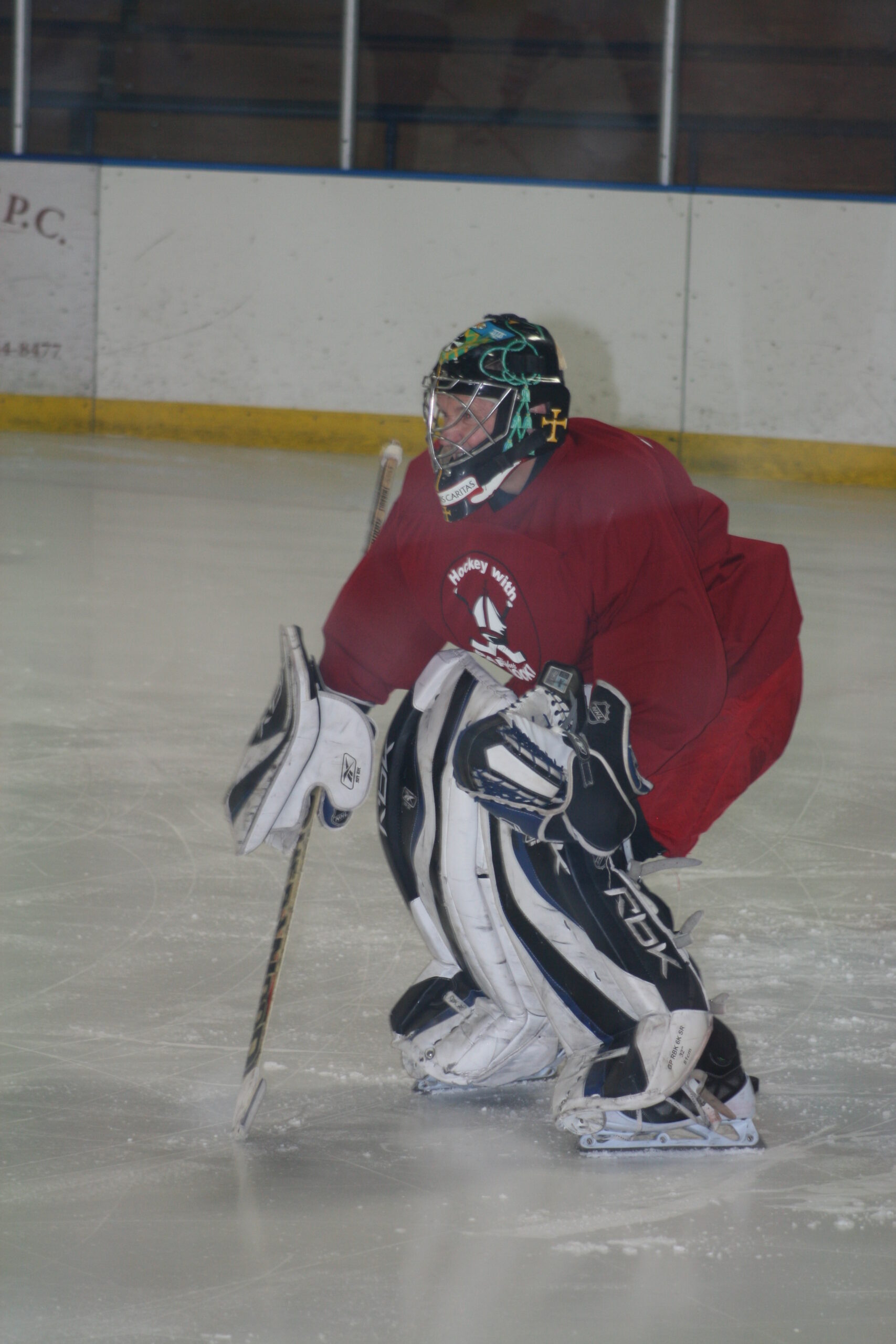
A. I'll go up to Chicago. I have a couple of classmates that I go to visit. We have a lake house on Duck Lake which is near Fox Lake, and we'll go up there and just relax on a day off. I'll try to get exercise on my day off. It might be a day when I can do a little bit more running and get in some hockey.
Q. How many vacation days do you get and where do you like to go?
A. Officially, I get a month like every priest. I don't know if I always take that. I've been going to Florida for a vacation in the winter. It's very low-key. I like to read. Some fiction, especially science fiction.
Q. When you are out and about, how often are people coming up to you or do you get people staring at you or do you get asked for pictures or blessings?
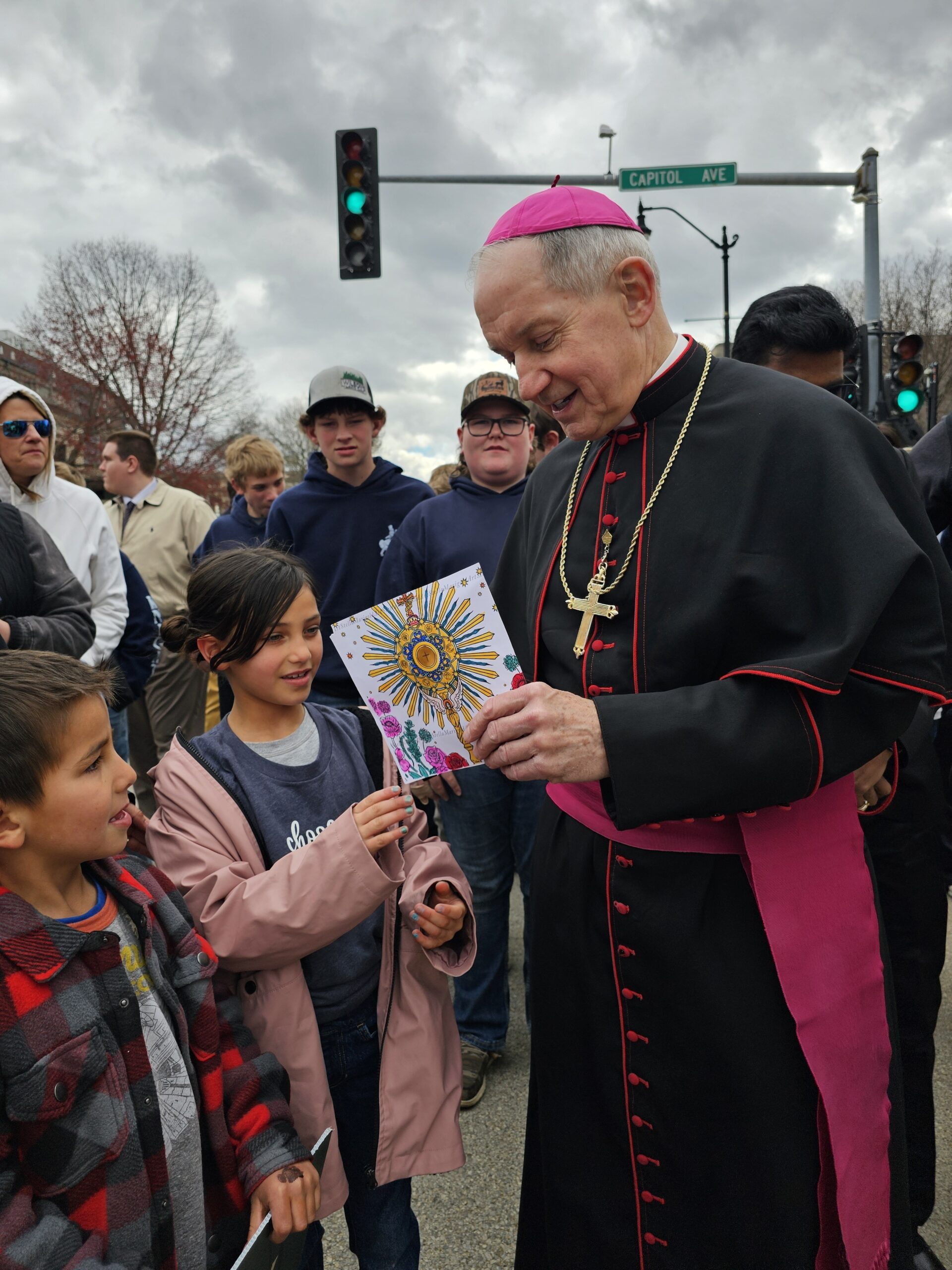
A. Yes, when I go to the grocery store, I might be wearing my clerical collar or just a clergy shirt or something like, so people will acknowledge me, and they'll say, “Hello.” I do work out at Fit Club South and occasionally, somebody will recognize me, but a lot of times, because I'm not wearing my clerical garb, I’m wearing my gym clothes and usually my White Sox baseball cap, they might look at me and think, “He looks familiar.”
Oftentimes in a restaurant, I will be recognized because I am wearing my collar. Sometimes, people will be very generous, and they'll pick up our check, which is a nice perk.
Q. How do you manage your schedule?
A. My executive secretary is Mrs. Laura Fjelstul, so she handles my calendar. We have a calendar meeting every week, and I do that with my vicar general, and other diocesan staff. I get a lot of requests including requests from outside the diocese, so that's why I like to go over that with my calendar team because sometimes, the request is a question of discerning if it is something I should do; if it’s a good use of my time. I don't want to spend too much time out of the diocese. On the other hand, as a bishop, there is a role for a bishop in the universal Church, and so I can't just say, “No, I'm only concerned about what happens here in Central Illinois as a bishop.” I play a role in the universal church as well. So, that's how we go over and decide which things to do.
Q. How often does Rome correspond with you? Is there a certain way they reach out to you internally?
A. Theoretically, yes. Sometimes, it depends on the dicastery (at the Vatican) as they call it. There are different departments. It also depends on the subject matter. Some, I have found, are pretty sophisticated, and they seem to have email lists of all the bishops, so they'll give us a heads up that this document is about to come out, for example. If it's embargoed, they'll let us know about that too, so I appreciate when that happens.
Other times, though, that doesn't happen. Sometimes, I hear about it in the news, or I hear about it through the media. So, that’s a little frustrating when that happens.
In terms of a more typical correspondence, there is a protocol for doing that. So, every country has what's called an apostolic nuncio, which is basically the pope's ambassador (ours is in Washington, D.C.). So, when I'm communicating with any of those dicasteries in Rome, typically the protocol is for me to send that communication through the nuncio in Washington D.C. and then they forward it to Rome. They have what's called a “diplomatic pouch.” So, they have a courier that actually takes it to Rome like every week or every couple of weeks or something like that. That may not be the fastest way, but it is the most secure way to get it there, and then typically a response will come by that same route and then forwarded to me.
Q. How often are you communicating with other bishops about news going on or maybe efforts you want to team up on?
A. I’d say quite a bit because I am part of, as every bishop is, the United States Conference of Catholic Bishops (USCCB). I'm chairman of the Committee on Canonical Affairs and Church Governance, and I'm also on a couple of other committees. I’m on the Committee for Budget and Finance and the Committee for Laity, Marriage, Family Life, and Youth. There will be times when we meet in person in Washington, D.C., where the USCCB headquarters are or in Baltimore where we have our November meeting or in June when we meet in different parts of the country. Oftentimes, a committee meeting will be by video conference.
Q. What do you call other bishops? Do you call them “bishop” then their name or do you just call them by their first name?
A. Typically by their first name unless it's in a formal setting. The formal title is “Your Excellency.” A cardinal is “Your Eminence.” The pope is called “Your Holiness.” If I'm at a formal dinner, and I'm introducing a bishop, I like to introduce him by saying, “His Excellency, the Most Reverend” and then his name.
Lay people will ask what I want to be called. I say, “Just call me bishop.” At a USCCB meeting, if we're just having a conversation, we'll just call each other by our first name.
Q. You are a pastor of souls, but as “CEO” as you mentioned earlier, there's finances and there's HR issues. Tell us about all the councils you have set up to debunk the idea that you as bishop are making decisions yourself.
A. Yes, we have a number of consultative bodies as they're called. Some of them are required by canon law such as a diocesan finance council, like every parish has. Our diocesan finance has people who have financial expertise in accounting or something like that. I have a diocesan pastoral council, which is made up mostly of lay people. We have three representatives from each of our deaneries. I find that very helpful.
For example, when we were having our Diocesan Synod in 2017, I did a lot of consultation with the diocesan and pastoral councils about that. With the decision to take confirmation and first holy Communion to the restored order of sacraments (these happening in third grade), and having these sacraments at the cathedral (not in the home parish), I found the input from the diocesan pastoral council helpful.
I also have a presbyteral council. This council is made up of priests. We also have the priest personnel board. So, for example, priest assignments, usually I make those appointments in consultation with the presbyteral council because the priests often know their brother priests better than I do.
Q. Compared to other dioceses, how are we doing in terms of vitality?
A. I'd say we're doing pretty well. My point of reference is where I came from in the Archdiocese of Chicago. I was a priest of the Archdiocese of Chicago for 25 years and then auxiliary bishop there for seven years before coming here. I have ordained 40 priests in 15 years here, which is I think is pretty good for the size of our diocese.
Putting that into perspective, we have about 100 diocesan priests. About 25 of them are senior status. So, 40 out of a 100 means I've ordained now 40 percent of the priests in our diocese and over half of the priests that are actively assigned in parishes. So, in that regard, I think we're doing pretty well.
In terms of percentage of people that go to church in our diocese, it is higher than some of the big urban areas. I've heard in Chicago, for example, Mass attendance is under 25 percent, maybe even less. We're above 30 percent, so in that regard I think we're doing better. It’s not as good as it should be. It should be 100 percent of people going to Mass on Sunday.
One area where I think we are lagging is in the percentage of people in our diocese that are Catholic. In Chicago, about one third of the people in the Chicago area are Catholic, which is a pretty high percentage. Here, we only number about 12 to 14 percent. We're further south, so the closer you get to the Bible belt, the more Protestants there are. So, we are a distinct minority here.
I keep saying, however, it doesn't have to stay that way. That's the whole point of evangelization and trying to bring more people into the Catholic Church, and so I think that's an area that is still a challenge for us.
Answers taken and edited from Hansen’s conversation with Bishop Paprocki on the diocesan podcast Dive Deep. Watch on dio.org/youtube or search “Dive Deep” on all the major podcast platforms.