
Several churches in diocese available for Special Year of St. Francis pilgrimage so you can receive indulgence
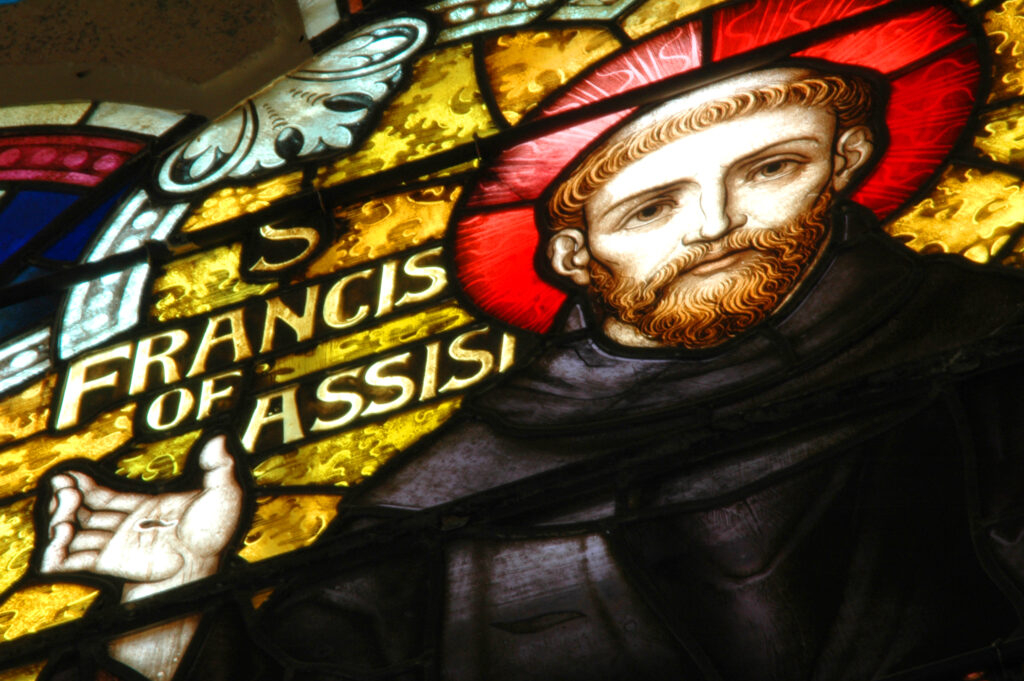
Pope Leo XIV has declared a Special Year of St. Francis to mark the 800th anniversary of his death, running until January 2027. During this time, the faithful can obtain a plenary indulgence by visiting Franciscan churches or praying spiritually if unable to travel, following the usual conditions of going to Confession, receiving the Eucharist, and praying for the pope’s intentions (e.g., one Our Father and Hail Mary). For example, in the Diocese of Springfield in Illinois, one can make a pilgrimage to St. Francis of Assisi Church in Teutopolis, St. Francis of Assisi Church in Springfield, St. Francis of Assisi Church in Hardin, or St. Francis Adoration Chapel in Alton (home of the Sisters of St. Francis of Martyr St. George).
The jubilee encourages imitation of St. Francis, promoting holiness, peace, and reconciliation in a world marked by conflict, division, and social unrest. Pope Leo XIV emphasized that St. Francis points to peace with God, among people, and with creation as a model for authentic reconciliation.
An indulgence is a gift and grace that remits the temporal punishment due to a sin, which has already been forgiven but not rectified. The Church grants indulgences for specific pious actions (certain prayers and devotions, pilgrimages, carrying out the works of mercy, reading the Scriptures, etc.) to encourage such devout practices as aids to growth in holiness.
The Handbook of Indulgences describes an indulgence further:
The remission in the eyes of God of the temporal punishment due to sins whose culpable element has already been taken away. The Christian faithful who are rightly disposed and observe the definite, prescribed conditions gain this remission through the effective assistance of the Church, which, as the minister of redemption, authoritatively distributes and applies the treasury of the expiatory works of Christ and the saints (Norms for Indulgences, 1).
An indulgence can be either plenary (that is, full) or partial. This plenary indulgence for making a pilgrimage to a Franciscan Church may be offered for one’s own spiritual benefit or may be applied through prayer for the souls of the faithful held in purgatory.
But, isn’t Confession enough?
If you went to confession and received absolution for your sins—how is it that there is still temporal punishment for those sins? Saint Augustine provides a helpful answer: “Man is obliged to suffer (in this life) even when his sins are forgiven, although it was the first sin that caused him to fall into this misery. For the penalty is of longer duration than the guilt, lest the guilt should be accounted small, were the penalty also to end with it. It is for this reason—either to make manifest the indebtedness of his misery, or to correct his frailty in this life, or to exercise him in necessary patience—that man is held in this life to the penalty, even when he is no longer held to the guilt unto eternal damnation.”
The difference between forgiveness of the guilt and paying the penalty can be seen clearly in the sin of stealing. When a person goes to sacramental confession and is absolved of the sin of stealing, there is still an obligation in justice to make restitution, that is, to pay back or restore what was stolen. If the rightful owner also discharges the debt, in a sense that is an indulgence, since the rightful owner is being indulgent in pardoning the debt as well as the guilt.
Similarly, a person who confesses to having used pornography is forgiven, but the desire to continue to look at pornography does not automatically go away and must be purged through mortification and penance. Thus, we have the pious practice of “offering up” our pains and sufferings in this life as penance for our sins. If that purgation is not accomplished before we die, it must be completed in purgatory or be remitted through various partial indulgences or a plenary indulgence. A plenary indulgence can be acquired only once a day, except for those who are on the point of death.
So, take advantage of this immense treasure of our faith!