
Catholic Psychologist: These are the Musts to Keep Your Kids Safe Online

Evil is a click away. Predators are a screen away. Anxiety is a text away. Unhealthy comparisons are a social media post away
Catholic Psychologist offers horrifying stats, tips, good rules, and resources so in a cultural digital battle for your child’s heart, mind, and soul, your child stays safe and parents can win
It’s one of the biggest challenges facing Catholic families — protecting their homes and family members’ souls from online dangers, especially children, whether it’s sexual content, online predators, social media, or children playing video games with friends. Catholic Times editor, Andrew Hansen, interviewed Dr. Peter Kleponis, a Catholic pastoral counselor, author, and Director of Integrity Counseling Services. With over 25 years of experience helping individuals, couples, and families find healing and freedom, Kleponis brings both professional insight and deep Catholic faith to his work.
In this interview, Kleponis explains what families are underestimating when it comes to the digital world, when is the right age for a child to have a social media account and a smart phone, and is a sleepover OK? He also provides tips and resources for building a digitally safe, spiritually strong home, and offers advice to parents if their child has been exposed to sexually explicit content.
Q. Let’s set the stage first with statistics that really hammer home this issue and why parents need to be proactive now against the dangers of the internet with their children.
A. The internet has been out for about 30 years now, and so we do have some good data on this. We’ve had at least two generations that grew up with it. When the internet came out, the first thing to jump on board was pornography. With young people being tech savvy, naturally they’re going to find it. Many of the pornographers really target young people. Through the years, things have really gotten scary.
Twenty years ago, the research told us that the average age of when a child first encountered pornography was 11. Newer research tells us now that it’s 8. So, it’s getting lower. Eighty-five percent of all 15- to 17-year-olds have had multiple exposures to hardcore pornography.
Twenty-nine percent of young children ages 7-9 would freely give out their addresses to anyone online. So, it’s very scary there. You know?
In our Catholic Church, we have all these safe environment programs, which is great, and they’re needed. However, I have to tell you, sexual predators are not hanging out in the school yard. They’re online. And that’s what we have to be aware of through pornography, through social media, all of this. So, parents really need to be on top of what kids are doing online.
Q. How does social media and all this digital connectedness hurt the mental health of children?
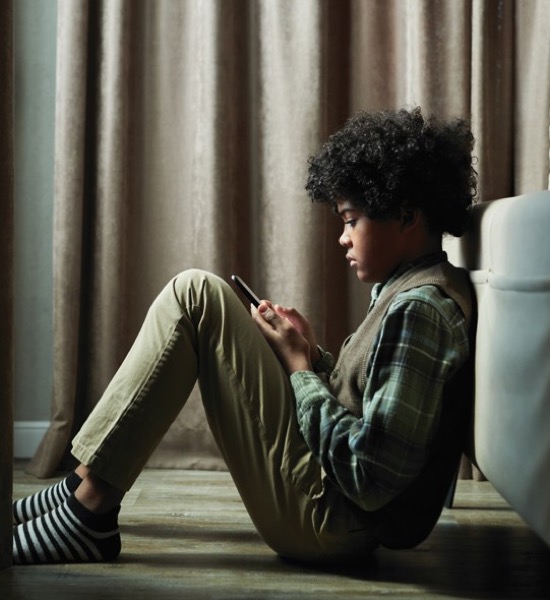
A. Social media is not real. What people are presenting on social media really isn’t true. It’s either the best of themselves or they’re lying and saying how great and wonderful their lives are. Kids can develop anxiety and depression through that comparison. They compare their lives to what they’re seeing on social media. Young kids, they believe everything they see on social media, and they think, “Wow, these people are just living these wonderful, fantastic lives, and I’m not. So, there must be something wrong with my life, wrong with my family. You know, I’m inadequate. I don’t measure up. I’m no good” and so forth.
This is what leads to this anxiety and depression. Plus, what’s also happening is because people are presenting these perfect lives online, young people think they have to measure up to those perfect lives, and they’re creating standards for themselves, expectations that nobody could ever meet. So again, there’s this incredible sense of inadequacy, this incredible not measuring up.
There’s also another issue. We call it FOMO — fear of missing out. Children think they have to be online all the time because they could miss something very important, but we know that is not true, but this is what young people are coming to believe.
Q. What are some of the most common online dangers you see parents underestimating?
A. They’re underestimating the power of the media and its influence. I’m a member of Generation X. We grew up with the TV and then video games and all that. But now, the influence is even greater. Another thing is that parents need to be aware of who their kids are interacting with online, and most parents don’t. You look at all these social media platforms where you have your friends and followers and subscribers and so forth, well, who are these people? Most don’t know who they are. They have no idea who their kids are interacting with online. These predators are not in the schoolyard. They’re online, and parents need to be aware of what their kids are doing on the internet.
Q. When is an appropriate age a child can have a cell phone and social media account?
A. I don’t believe kids should have a social media account until they’re in high school. There is no need for a child in elementary school or middle school to have a social media account. They see their friends every day in school. They don’t need to be with them in the afternoon and at night. They’re not aware of the dangers of the internet or social media. Their brains have not developed enough to really understand what the dangers could be. So, we really need to protect the kids when it comes to things like cell phones and social media. There’s no reason for a young child or elementary school or middle school to be involved in these types of platforms.
When I say cell phone, I mean a smartphone. There’s no reason for an elementary school or middle school kid to have a smartphone. A dumb phone/flip phone is fine.
Q. Social media and gaming often feel like the new “neighborhood hangout.” How can families figure out what’s healthy digital connection — and when it crosses the line into spiritual or emotional harm?
A. Here’s where parents need to have full access to everything their kids are doing online. As I said, up until high school, there’s no need for social media. I get it — their friends are online, but it’s not very healthy for them to just be interacting with them online. Let’s look for other ways to do that. Parents, if a child is going to have a social media account, a parent needs to have full access to that to understand what they’re doing, where they’re going, and who they’re communicating with. And not just social media. Everywhere they’re going on the internet, what video games they’re playing. All of that parents need to be on top of. I know that’s hard. That’s a big job, but it’s all about protecting our kids.
Q. How can parents begin age-appropriate conversations with their kids about pornography, sexting, online predators, social media — while at the same time, not planting a seed in their young child’s mind to go exploring on the internet?
A. It’s not just one talk. This is an ongoing conversation that has to begin around age 8 or 9. It’s the birds and the bees talk, understanding sexuality, understanding puberty, along with understanding the dangers of the internet with pornography and so forth. You need to start early.
There’s a wonderful collection of books called Good Pictures, Bad Pictures that starts by explaining the dangers of the Internet and pornography, on a fourth-grade level. Parents need to begin with these things and help kids understand the dangers out there. It’s not going to be a once and done talk. I know parents that would just want to do it and get it over with, but it has to be a series of conversations that you slowly guide your child into the world of adulthood and sexuality, the beauty of it and the dangers of it. Don’t think that your child is never going to see pornography. It will happen. But you have to help them to understand that this is not God’s plan for sexuality.
Q. If a parent discovers their child has already been exposed to something harmful online, what’s first step they should take?
A. If you discover your child’s been viewing pornography, step number one, apologize. Say, “I’m sorry. I did not protect you well enough from this. I take full responsibility. You’re not in trouble, but let’s talk about this. Let’s talk about what you saw. Let’s talk about what it means. Let’s talk about God’s plan for sexuality and how pornography really violates that. Let’s talk about how pornography is just about using and that’s it. It may be thrilling. It may be exciting, but this is not God’s plan.”
Oftentimes, when a parent discovers their child viewing pornography, they get angry, they yell at the child, they heap all kinds of shame on the child, and the kid doesn’t know. The kid may have discovered it by accident, and their natural curiosity, especially if they’re getting into puberty, they’re becoming a sexual person.
They’re going to go down that path. You have to understand that’s what’s going to happen, but this is not a time to be yelling at them and heaping shame on them. This is an opportunity for a real conversation.
If the parents presented this as this huge taboo, the kids’ natural rebellious streak is going to make them want to go and do it even more. So, it can’t be like a nuclear explosion (when talking to the child).
Q. What are some steps and digital resources families can take right now to make their homes digitally safe — without turning their house into a fortress or creating fear?
A. The key is education and monitoring. You need to educate your kids. As they grow older, they have to realize, the internet is a tool where you can get a lot of good information, do a lot of great things, but there’s a lot of dangers out there. So, you have to educate them on this — be very careful where you go and what you do on the internet. Again, that’s an ongoing conversation.
Number two is you need to monitor everywhere they go on the internet. There are lots of companies (apps) out there that do that. The two that I recommend, and I’m not getting paid to say this, are Covenant Eyes and Canopy. Now, these companies offer two different services. One is a filtering service. The other is an accountability service.
For the young kids, you want to have the filtering service to filter out as much bad stuff as possible but realize these are not fail proof. Never leave your child alone with the internet. If you’re going to leave your kid alone with the internet, you might as well be leaving them alone with a perfect stranger. That’s what it is. As they get into their high school years and adult years, you don’t want the filter because first of all, it could filter out information they do actually need, and kids are savvy, and they may find ways of getting around the filter.
So, at that point, you want the accountability service. Now what you do with this, it doesn’t filter on anything, but it monitors what happens. So, you subscribe to the service, you download it onto all your kid’s devices, and what happens is it monitors everywhere your child goes on the internet. The parent will then get an email report of where the children are going online and whether or not it’s questionable. They rate it red, yellow, and green type of thing.
If there is a problem, again, you have a talk to you with your kids about it. Don’t make it World War III but have a good talk with them about it. These apps can cover video game systems, tablets, laptop computers, desktop computers, all of that. What these systems do not cover are other devices like smart TVs.
So, with this, what I recommend is basically a whole house filter. This is a filter that you place on the router so that it places a filter on any device used within the home that has access to the internet. It’ll protect all the other devices in the house, like cell phones, but once you leave the house, that no longer covers it. So that’s why you still need these other programs like Covenant Eyes or Canopy.
Q. How do you feel about sleepovers? Is there an appropriate age for sleepovers?
A. Yep. I have no problems with sleepovers as long as you as a parent know the parents of your kid’s friends. What are the kids going to be doing? What are their activities? Are they going to be online? Are they going to be watching movies? What movies are they watching? How will they be monitored? How will they be supervised?
So, if my middle schooler is going to a friend’s house for a sleepover, I want to make sure there’s a parent there supervising everything they’re doing. As long as you have the parental supervision, you know exactly what they’re going to be doing, what technology, that’s fine. If there’s no supervision, if you know that their friends have smartphones and their parents are not monitoring everything, no sleepovers. They can come over to your house for a sleepover, but your kids are not going over there.
Q. How can screen usage impact kids with ADHD?
A. Excessive screen time doesn’t cause ADHD. However, people with ADHD are more prone to internet-based addictions because the person who struggles with ADHD, their brain craves more neural stimulation than the average person. So, what happens, they sit down to read a book. The brain says, “Nope. Not stimulating enough.” Their brain is constantly looking for that extra-neural stimulation. This accounts for the struggle with focus, with attention. The hyperactivity is just them jumping from one activity to the next looking for that stimulation.
Now in comes the internet with all the bright sounds and colors and bells and whistles, and the brain says, “Finally. All the information you could ever want.”
But this is what makes a person with ADHD more prone to developing internet-based addictions, which could be pornography, gambling, video games, news feeds, fantasy sports leagues, all kinds of things that they can get addicted to including social media. So, we have to be very careful. So, if you or your child struggle with ADHD, it’s not that you can’t use the technology, but you have to be very careful with it and put limits on it.

Q. What roles do family habits — like shared meals, prayer time, or tech-free evenings — play in building a child’s inner strength to make good choices online?
A. There’s a reason why God created us to be raised within families. Families are very important. We need to have those close connections. We need to have that close bond with our parents. We need people that can raise us and guide us and teach us in a very close intimate way.
When we have healthy family relationships, we come to understand the value and purpose of those close relationships. I tell families you need to have these tech free times, no technology at the table during meals, no technology during family times. Maybe, let’s go the whole weekend without technology. Let’s focus on our time together and developing those relationships. When we do that, when people understand the value and the benefit and the need for healthy relationships, we’re following God’s plan.
God did not create us to spend our whole lives, you know, stuck on a screen. We were created for relationships. When we have really good, healthy, and positive relationships with our parents, that’s going to contribute to a healthy relationship with God. If we don’t have a relationship with our parents, it’s going to be very difficult to develop a relationship with God. Parents become the model for that.
Q. How do parents communicate with their children that rules are a good thing for their safety and wellbeing?
A. I tell this to my own kids: Freedom comes through a game of opposites. What you want to do is really the opposite of what you need to do in order to gain freedom. If you were just able to go out and do everything you wanted to do, just whatever your basic desires demand, are you really in control? No. Eventually, all those things out there end up controlling you.
You’re really in control when you’re able to say “no” to the bad stuff and “yes” to the good stuff. That is where you are really in control. That’s where you have your freedom, that freedom of choice to choose the good and to not choose the bad out there. But it also requires you to be able to think about these things and make healthy choices, make the right choices between what’s good and what’s not good. So, really, it’s about being able to discern right from wrong, good from bad, and being able to make the right choices. That’s freedom.
Yes. So, again, yes, it appears like it’s very restrictive, but at the end of the day, it actually leads to greater freedom. So, it is. It’s often a game of opposites. Alright.
Q. If you could speak directly to every Catholic parent— maybe one who feels worried, guilty, or even a little defeated — what words of encouragement would you leave them?
A. First of all, parenting is the hardest job in the world, and every parent deserves credit for the work they’re doing because it’s very hard. I always tell parents, it’s never too late to correct course. It’s never too late to sit down with your teen or just say, “I screwed up. I really should have been monitoring this, and I have not been protecting you. That’s my job. And this is what I’m going to start doing, and I’m going to work with you to help protect you, to educate you, so that you can go out into the world as an adult who’s going to be safe and healthy.”
I also always tell parents that we don’t raise kids. We don’t raise children. We raise adults. Mature, responsible, independent, self-sufficient adults. That’s the end result, and yeah, it’s a hard job, and we have to let our kids understand, as a parent, this is my job, and it’s not an easy job, and growing up is not easy. I realize it’s not easy for you too, but you have to understand what the end goal is to do that.
Most teenagers, when you explain this to them, they get it. They understand. They can understand that there are going to be times when we’ve got to be tough. There are going to be times when we’re not going to be the fun parent. That’s OK. But they know what the end result is, and they know that it is what is needed, and it is what’s good.
Answers taken and edited from Hansen’s interview with Dr. Kleponis on Dive Deep, the official podcast of the Diocese of Springfield in Illinois. Listen to their interview and subscribe to the podcast by searching Dive Deep on all the major podcast platforms. You can also watch this interview and other Dive Deep podcasts by scanning the QR code or visiting youtube.com/diospringfield.
Parents are invited to talk with Dr. Kleponis in Quincy in March
All are invited to a talk by Dr. Peter Kleponis, a pastoral counselor and Director of Integrity Counseling Services. His program is titled “Protecting Catholic Families Online” and will take place at St. Francis Solanus Parish in Quincy. His first talk on March 8 will focus on understanding the dangers of the internet. His second talk on March 9 will focus on practical strategies for protecting families. Both talks run from 7-8:30 p.m., are free, and open to the public. You can R.S.V.P. at tinyurl.com/talkatsfs or by calling St. Francis Parish at (217) 222-2898.