
A Catholic response to the immigration and deportation debate
By FATHER CHRISTOPHER TRUMMER, S.T.L.
Special to Catholic Times
Few issues in American public life are as divisive and emotionally charged among Catholics as immigration. The topic stirs deep and often conflicting convictions: compassion for migrants and refugees, concern for national sovereignty and legal order, a longing for justice, and anxiety about social and economic change. Even among believers, conversations on this topic are often marked by polarization, misunderstandings, and mutual suspicion — if not mutual silence.
This article proposes a better way: a Catholic approach to immigration that is morally grounded, theologically sound, and capable of fostering genuine dialogue. By recovering the Church’s principles, acknowledging the role of prudential judgment, and affirming the unique vocation of the laity in the political sphere, we can engage this issue with greater clarity, charity, and courage.
This is not a partisan argument or an endorsement of any particular policy. It is an invitation to a deeper understanding of what is at stake in this important matter of public life. The Church’s social teaching provides a moral framework that neither oversimplifies nor ignores the complexity of immigration. By examining that framework, Catholics can be equipped to speak with both conviction and compassion while also respecting the legitimate diversity of views.
Three pillars of the Church’s teaching
The Church does not offer a detailed roadmap for immigration reform. Instead, the Church proposes moral principles drawn from Scripture, Tradition, and natural law that guide both reflection and policymaking. These principles do not yield simple answers, but they do establish the moral boundaries within which Catholics must discern and decide.

1. The dignity of the human person
Every human being, regardless of legal status, nationality, or origin, is made in the image and likeness of God (cf. Gen 1:27). As a recent declaration from the Dicastery for the Doctrine of the Faith stated, “Every human person possesses an infinite dignity . . . which prevails in and beyond every circumstance, state, or situation the person may ever encounter. This principle . . . underlies the primacy of the human person and the protection of human rights” (Dignitas Infinita, n. 1).
This obviously holds true for immigrants as well, regardless of their legal status, a fact that Pope Benedict XVI underlined: “Every migrant is a human person who, as such, possesses fundamental, inalienable rights that must be respected by everyone and in every circumstance” (Caritas in Veritate, n. 62).
These rights include not only life and safety, but also work, family unity, and religious freedom. No immigration system can be morally just if it fails to uphold the personal dignity of those affected by its policies. At the same time, the rights of one person do not automatically entitle one to the full benefits or resources of a group or society. The specific way our rights and duties are lived out is negotiated through consent and social norms. Many of these norms are then formalized in laws through the political process.
The principle of human dignity challenges us to view immigrants not as burdens or statistics, but as persons to be loved, protected, and treated with justice.
2. The Right to Migrate
The Church affirms that people have a natural right to migrate when necessary to protect their life, dignity, or livelihood. Pope St. John XXIII taught, “When there are just reasons in favor of it, [every human being] must be permitted to emigrate to other countries and take up residence there. The fact that he is a citizen of a particular State does not deprive him of membership in the human family” (Pacem in Terris, n. 25).
Many immigrants today do not migrate because of mere convenience or preference but due to urgent necessity, such as war, persecution, social and political unrest, systemic poverty, and environmental factors. In such cases, migration is not so much a choice as a matter of survival.
Even so, the right to migrate is not absolute. Prudence is needed to determine what counts as a “just reason” for immigration. For example, not everyone who would benefit economically by moving to another country has a moral claim to do so. Where the need is truly grave, however, wealthier nations have a moral obligation — within reason — to assist.
Importantly, the decision about whether immigration is justified in a particular case does not rest solely with the would-be immigrant; it is also the responsibility of the receiving country to make that determination. The desire to migrate, however strong and sincere, does not automatically establish the right to do so.
Legal vs. illegal immigration
When we speak of the right to migrate, it is generally assumed that migration occurs through legal channels. However, even illegal entry may be morally justified if all the following conditions are met:
- The person is unable to provide for themselves or their family in their country of origin;
- Legal immigration pathways are effectively closed or unjustly restrictive;
- Crossing a border illegally is the only available means to secure basic human goods such as safety, food, or shelter.
In such cases, the individual would not be morally culpable for violating immigration laws, even if civil penalties still apply.
This judgment is grounded in the principle of the universal destination of goods, a cornerstone of Catholic social teaching. God created the goods of the earth for all people. While private property is legitimate and necessary for human flourishing, it is not absolute. Just as a starving person who takes food to survive is not guilty of theft (cf. CCC 2408), so too a person who crosses a border out of urgent necessity may not be morally blameworthy — even if they have broken the law. Whether and how such persons can be successfully integrated into the country as long-term citizens is a separate and complex question.
3. The right and duty of nations to regulate immigration
Alongside the rights of migrants, the Church also affirms the right — and duty —of nations to regulate immigration in service of the common good. The Catechism states:
“Political authorities, for the sake of the common good for which they are responsible, may make the exercise of the right to immigrate subject to various juridical conditions” (CCC, n. 2241).
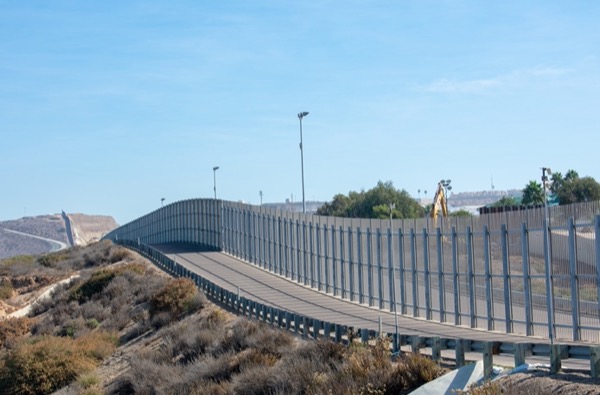
This includes securing borders, maintaining public order, and ensuring the stability of cultural and economic life. While the right to migrate is real, it must be balanced with a nation’s capacity to welcome and integrate new arrivals. Finding this balance is the real crux of the debate.
Where the restriction of immigration is justified, this must be carried out in a way that respects the dignity of all persons involved. As the U.S. and Mexican bishops wrote in a joint statement: “While the sovereign state may impose reasonable limits on immigration, the common good is not served when the basic human rights of the individual are violated” (Strangers No Longer, n. 39).
Some proponents of expansive immigration policies have gone so far as advocating for a borderless world, appealing to ideals of universal solidarity and justice. However, the Church does not see this as an ideal or something to be pursued. Modern nation-states, though imperfect, generally serve the common good. They offer a framework for order, accountability, solidarity, and subsidiarity — values deeply rooted in Catholic teaching. Borders and sovereignty are not inherently unjust or contrary to human flourishing; they exist to promote justice and peace within a political community that is defined by shared values, culture, religion, language, history, etc.
Prudential judgment and the mission of the laity
Grounded in Scripture and the natural law, the Church teaches timeless moral principles, but the Church entrusts their application to prudential judgment, which isreasoned discernment about the best course of action in light of particular circumstances. This is especially true regarding issues like immigration, where goods such as justice, solidarity, the common good, and the rule of law must be carefully weighed together.
Prudential judgment requires a solid grasp of the issue at hand. Yet our content-saturated culture often discourages the kind of sustained attention and reflection that true understanding demands. Debates over immigration — especially online — often rely heavily on slogans and soundbites that ignore the genuine complexity of the issue.
Even Christians can fall into this tendency by quoting Scripture verses to “prove” their positions. For example, some cite Deuteronomy 10:19 (“Love the sojourner, therefore, for you were sojourners in the land of Egypt”) or Matthew 25:35 (“I was … a stranger and you welcomed me”) to justify extremely expansive and lenient immigration policies. Conversely, others might appeal to passages such as Nehemiah 2–6, which recount the rebuilding of Jerusalem’s walls, to highlight the importance of borders, security, and national identity. They may also cite Romans 13:1 (“Let every person be subject to the governing authorities; for there is no authority except from God, and those that exist have been instituted by God”) to emphasize the need for law, order, and respect for government authority.
Such passages are inspired and relevant, but they were not written to directly address the complex immigration situation in the 21st century. Scripture must be read in context and interpreted through the lens of the Church’s tradition before its timeless truths can be applied to present-day situations.
Our shared faith in the Word of God and the Church’s teaching does not mean that every reasonable Catholic has to arrive at the same conclusion on this immigration debate, as though only one legitimate Catholic position exists. We should not demand uniformity where the Church permits diversity on this issue. As the U.S. bishops write in their teaching document Forming Consciences for Faithful Citizenship (2023):
“Catholics may choose different ways to respond to compelling social problems, but we cannot differ on our moral obligation to help build a more just and peaceful world through morally acceptable means, so that the weak and vulnerable are protected and human rights and dignity are defended” (Forming Consciences, n. 20).
This is not moral relativism. It is a recognition of the laity’s vocation. As the Second Vatican Council taught, lay people are called to “seek the kingdom of God by engaging in temporal affairs and by ordering them according to the plan of God” (Lumen Gentium, n. 31).
This is especially true in the case of immigration. Legislators must craft just and workable laws. Judges must interpret them with integrity. Employers must treat workers fairly. Citizens must vote with conscience. Lay Catholics in every field must help shape policies that reflect both justice and mercy.
While the bishops serve as indispensable shepherds of the Church and teachers of the Faith, it is not their role — or within their competence — to develop and promote detailed policy prescriptions. Exercising prudential judgment in their role as citizens, with consciences formed by Scripture and Church teaching, it is primarily the responsibility of the laity to infuse society and culture with the values of the Gospel. In the context of immigration policy, this involves discerning, among other things:
- What constitutes a just reason for immigration;
- What the penalties for illegal entry should be;
- When deportation is warranted, and how exactly it should be carried out;
- What level of immigration a society can absorb without undermining its stability.
Neither Scripture nor Church teaching provide ready-made answers to these important questions. Discernment about these matters must resist all ideological extremes and seek the good of all — including newcomers and long-term citizens.
Finally, our discernment of the common good must take into account not only present needs but also the well-being of future generations. This means that immigration policy cannot be evaluated solely in terms of short-term economic costs or benefits. Rather, it must also promote the long-term stability and sustainability of the economy, social fabric, and public institutions.
What about deportation?
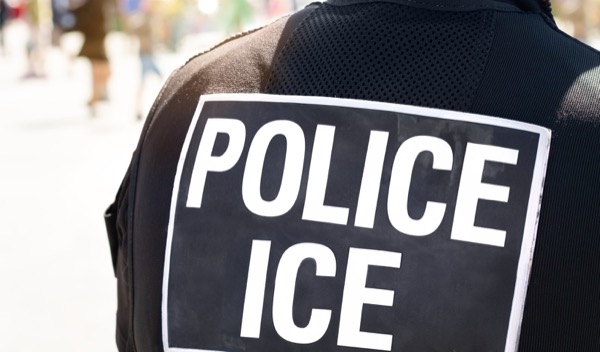
Deportation is one of the most painful aspects of immigration enforcement. It can tear apart families, upend livelihoods, and damage communities. It is the most dramatic measure used in the enforcement of immigration laws, and for that reason, it is also the most controversial and hotly debated practice.
We have to note at the outset that the Church does not teach that deportation is intrinsically evil (i.e., morally wrong in all circumstances). The state has the right — and at times the duty — to enforce immigration laws, including even the removal of those who lack legal standing. This is especially true when:
- They entered or remained unlawfully;
- They pose a threat to public safety;
- No mitigating circumstances justify their staying.
But deportation becomes morally problematic when it is applied without proportionality or due process. Examples include:
- Separating parents from children without grave reason;
- Returning individuals to countries where they face imminent persecution;
- Ignoring a person’s deep and successful integration into local life.
While states may enforce their laws, they must do so with justice and restraint. Few people want to live in a police state characterized by mass raids, surveillance, or indiscriminate detention. Overly aggressive law enforcement breeds fear, fractures communities, and undermines trust in public institutions.
At the same time, legitimate laws do have to be enforced, and this is never done perfectly. The existence of some failures or excesses does not, by itself, invalidate the law. What matters is that those responsible are willing to confront their failures honestly and correct them in the pursuit of justice.
Finally, even when penalties for illegal immigration are justified, deportation is certainly not the only option. Other legal remedies — such as fines, delayed work permits, suspended access to benefits, or denial of citizenship — can be more proportionate responses in certain cases. When wisely applied, these measures uphold the rule of law without resorting to unnecessarily harsh consequences. A just society seeks not simply to deter wrongdoing, but to foster restoration, reintegration, and the flourishing of the community.
Finding a balanced approach through dialogue
A Catholic approach to immigration rejects two extremes: on one side, dehumanization, indifference, and scapegoating; on the other, open borders, unconditional amnesty, and the undermining of national sovereignty. Catholic social teaching holds together justice and mercy, law and love, sovereignty and solidarity — even when doing so creates serious tensions.
Thus, a Catholic approach must:
- Defend the dignity of every migrant;
- Uphold the rule of law and national sovereignty;
- Oppose unjust, discriminatory, or excessively punitive policies;
- Promote reform that is compassionate, sustainable, and ordered to the common good.
Balancing all of these goods requires charity in dialogue. Political disagreement among Catholics does not necessarily imply unfaithfulness on the part of anyone involved. Prudential questions admit multiple answers. Christian charity requires that we assume good will in others — especially fellow Christians — and seek understanding instead of resorting to accusation and personal attacks.
When faced with complex issues, it is tempting to reduce people to simplistic categories based on their views. This can stem from intellectual laziness or a need for clarity that offers comfort, but a sincere pursuit of truth fosters humility and enables charitable disagreement. Though disagreement is rarely easy, a Christian secure in his faith will not feel threatened or angered by differing views. The ability to disagree well is a mark of intellectual and emotional maturity. In today’s polarized climate, we must recognize how political rhetoric can manipulate our emotions and make us more combative, which creates further conflict and division.
Politics = The art of the possible
Politics often thrives on polarization. Partisan media, campaign rhetoric, and electoral strategies push us to see issues in black and white and to rigidly pick a side. This mindset makes it harder to grapple with the complexity of immigration and the moral ambiguity often present in policy and enforcement. But Catholic discernment requires careful evaluation — recognizing that even within a single system, some elements may respect human dignity while others may fall short. We must resist the “all or nothing” mentality that blindly endorses or rejects an entire approach. No mainstream party or political platformfully embodies Catholic social teaching. Our task is to think with the Church, applying her principles consistently, even when doing so challenges political loyalties. This mature approach enables us to affirm what is good, confront what is not, and work patiently for a more just and humane system — even when perfection remains out of reach.
What can Catholics do?
In an age of polarization, misinformation, and soundbites, Catholics are called to rise above the pettiness and noise. Drawing from the moral and spiritual riches of our Tradition, we can offer thoughtful, principled contributions in place of the slogans and emotional manipulation that dominate our political discourse.
Constructive participation in the political sphere begins with formation and leads to action. Regarding the issue of immigration, some useful steps would be:
- Study the Church’s social teaching on human dignity, solidarity, and the common good;
- Listen to the experiences of migrants and those who serve them;
- Support ministries and charities that assist immigrants;
- Advocate for policies that balance justice and compassion;
- Pray for a spirit of peace and wisdom in public discourse.
Conclusion
Immigration is not just a political issue or an economic debate. It is a deeply human concern with serious moral and spiritual implications. Because it touches the lives of people made in God’s image, it demands more than slogans or soundbites.
On this question of immigration, the Church calls us to be faithful: faithful to the dignity of every human person, to the demands of justice, and to the works of mercy. The Church also invites us to embrace the challenging work of discernment and the need for principled compromise in public life.
Catholics may differ in good conscience about specific immigration policies, including enforcement and deportation, but we are not free to ignore the Gospel or the Church’s teaching. Our conversations must be rooted in truth, guided by love, and directed toward the good of every person — both migrant and citizen. Only then can we bring light, not heat, to one of the most urgent moral challenges facing our nation.
- Father Christopher Trummer, S.T.L, is parochial vicar at St. Boniface Parish in Edwardsville, where he serves the Spanish-speaking community. He is also associate delegate for Health Care Professionals and has a license in Sacred Theology in Moral Theology from the Pontifical University of the Holy Cross in Rome, Italy.